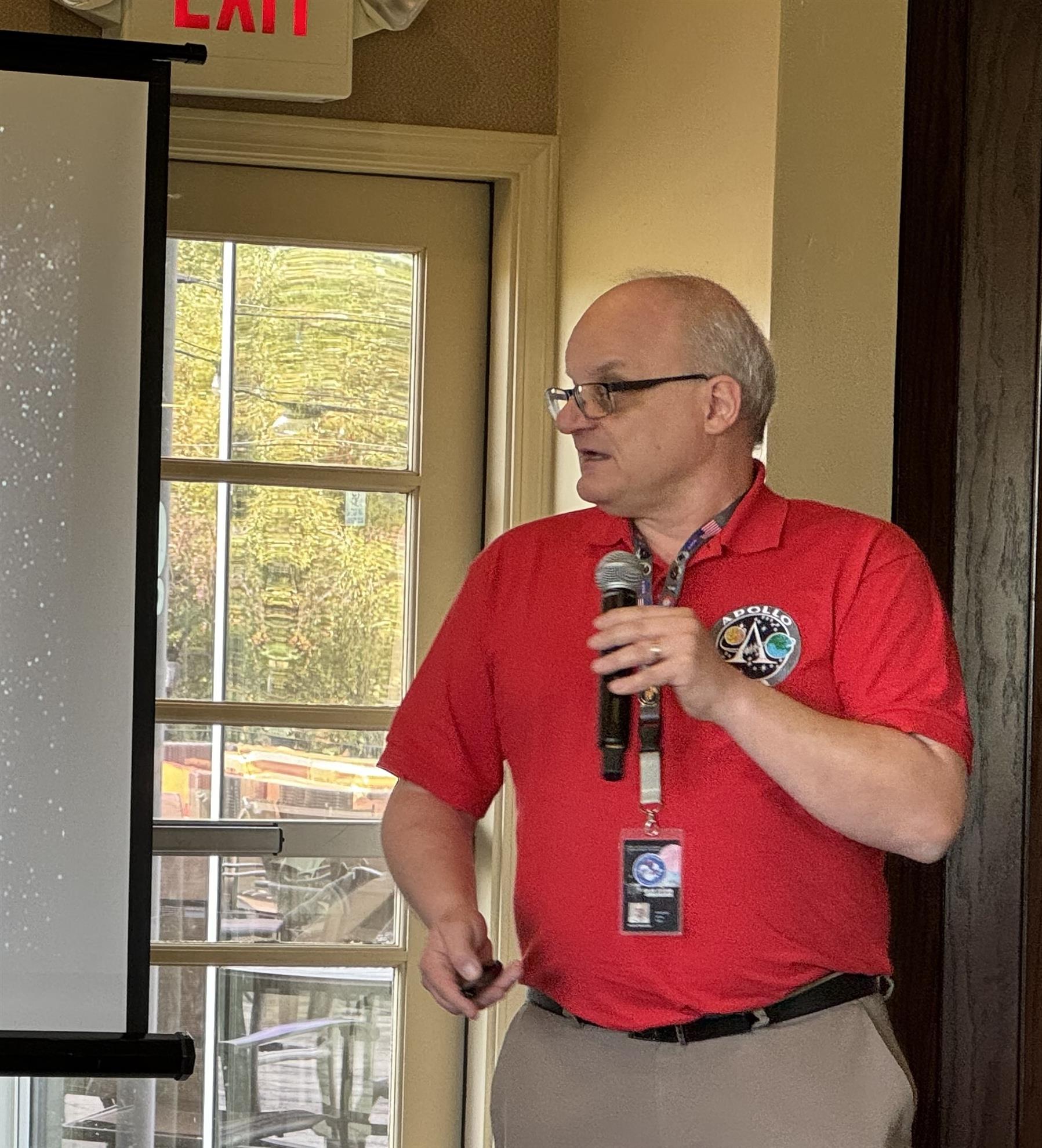
 Earlier this year Michal Warzecha became El Dorado Hills’ first NASA Solar System Ambassador. Michal Warzecha presented to us a fascinating program about NASA Moon projects, covering the following: How did we achieve our first footsteps? How are we returning in a few years? What are the future plans for a permanent presence? Earlier this year Michal Warzecha became El Dorado Hills’ first NASA Solar System Ambassador. Michal Warzecha presented to us a fascinating program about NASA Moon projects, covering the following: How did we achieve our first footsteps? How are we returning in a few years? What are the future plans for a permanent presence? Michal opened with a recollection of what a shock it was to America to hear that the Soviet Union had launched the first orbiting satellite, Sputik. Only 4 years later, The Soviets sent up the first human to orbit the earth, Yuri Gagarin. Shortly thereafter, J.F. Kennedy stated the goal for the USA to put a man on the moon during the '60s. Three factors helped the US achieve this goal: a visionary president; the world's biggest economy; and a thriving aerospace industry. The U.S. proved to be able to design and manufacture the giant Saturn V rocket, have good success in the Mercury and Gemini programs, and was successful in putting men on the moon by July of 1969. On Apollo 11, 12, 14, 15, 16, and 17 the U.S. was able to put men on the moon for stays of up to 22.5 hours outside the space capsule. But now, our goal is to put a space station on the moon for an eventual permanent presence. Michel gave us a good overview of the Artemis Project. The Artemis program is a robotic and human Moon exploration program led by the NASA along with six major partner space agencies and 31 countries The main parts of the program are the Space Launch System (SLS), the Orion spacecraft, the Lunar Gateway space station, and the commercial Human Landing Systems. The program's long-term goal is to establish a permanent base on the Moon to facilitate the potentially allow human missions to Mars. |



.png)


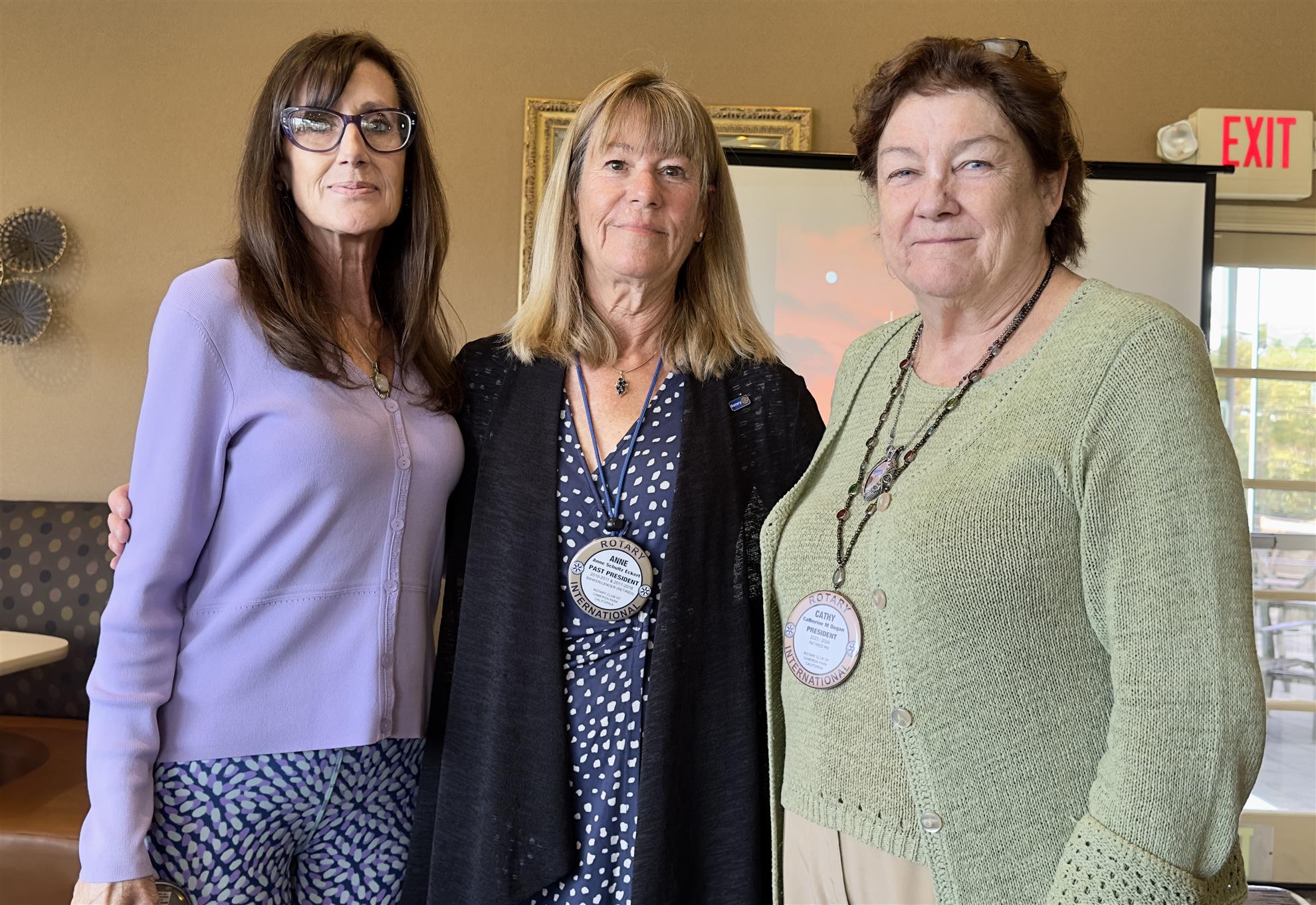 Anne Eckert: and the club welcomed new, and former member,
 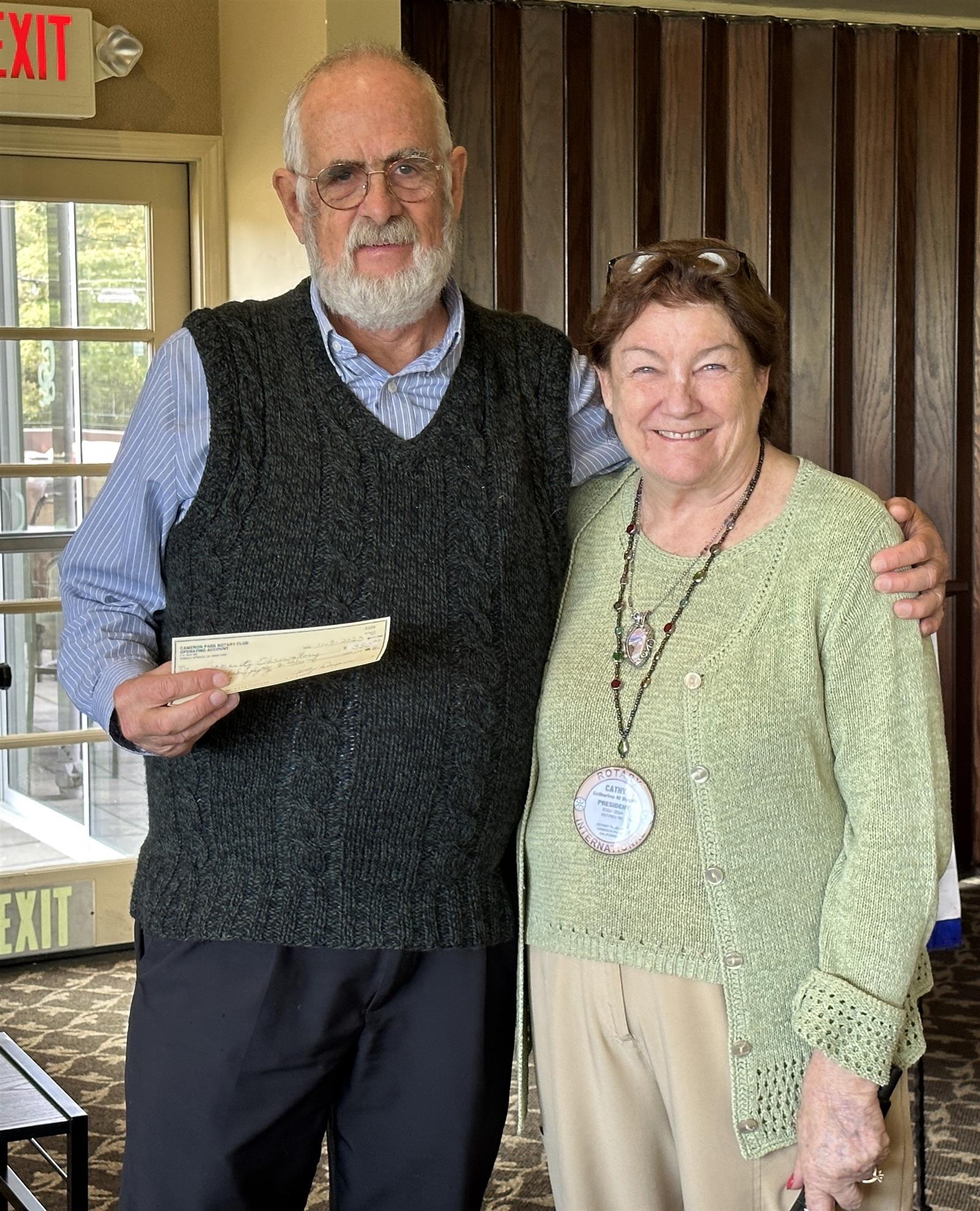 Laurie Edwards: Randy Hodges will take over as chief docent at the Community Observatory in January. He spoke a few words and we presented him with a check for $350 which was excess money that we collected for our club's event at the Observatory in October.